» Castle Ryckevelde » Saint-Martinschurch » Allekerke windmill » Village windmill  » Domain Ryckevelde  » Popular game 't Keunekot |
Sijsele
Outside the center of the village, there still is a mill (Akkermolen) and in the center stands the body of the villagemill. The railway from Bruges to Eeklo used to pass on the territory of Sijsele. In the meantime this line has been given up and in the bed of this railway a very attractive walking and cycling route has been laid out. In the direction of Moerkerke lies a golf course. In Sijsele, there also is a hospital (the Alma hospital), and the military domain of Belgium's 51st logistics battalion.
History.
Sijsele was no ordinary village. The Our Ladies church (at that time of more modest size than nowadays) of Bruges was founded under the authority of the church of Sijsele and was even built on land belonging to the castle of Sijsele. The court of justice of Sijsele was situated in Bruges, on the Burg to be exact There already was a church here before the 10th century! The dissapeared Sint-Maartenschurch belonged to the chapter of Utrecht. The territory of the church reached as far as the first defence walls of Bruges and consisted of (amongst others) Sint-Kruis, Viven (Vivenkapelle), Male and a large part of what is now Bruges. Nothing remains of this first church; it fell prey to the Geuzen (protestant religious fighters). A second church (17th century) went up in flames. A third church was built in 1838, but already 50 years later the building had become too small. The present Sint-Martinuschurch was consecrated in 1897.
Besides the clerical, there was also a secular power: the lords of Sijsele. The destruction of the castle of Sijsele was caused by a wrong political choice of one of the lords: Jan van Sijsele chose the side of the French king in 1302. After the Flemish victory against the French, the property of the lords of Sijsele was confiscated by the count of Flanders and the domain remained in the possession of the counts until 1360. Later on, the "Court of Sijsele" was built on the place of the burnt down castle (behind the church). Philips II (1527-1598, king of Spain) promoted the domain to barony. The farm "Rostune" was built in 1724. The name "Rostune", however, is much older than that and goes back to the middle of the 13th century. The French occupation at the end of the 18th century unfortunatelly meant the end of this manor. In order to be able to pay all the taxes, imposed by the occupator, almost everything had to be sold. Only the farm remains thus. The castle of Ryckevelde lays in a woody scenery, not for away from the castle (abbey) of Male. On the domain, you can find the Center for European and International Education. There is also a heritage garden which is accessible for wheelchair users and blind people. Already in the 15th century there was a fortified farm here (and it is still there). The castle itself was only built in the beginning of the 20th century in neogothic style. |
          
|
 General.
 Fixed
events.
Fixed
events. 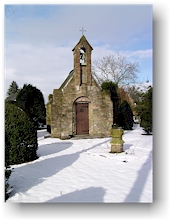 In
1239, Egidius van Breedene donated a piece of land to the
Cistercienzer (religious order). Between 1247 and 1257, the
sisters built a convent and a church: the abbey of Spermalie.
The Geuzen (protestant religious fighters) destroyed the abbey
and in 1587, the sisters had to leave their convent and fled to
In
1239, Egidius van Breedene donated a piece of land to the
Cistercienzer (religious order). Between 1247 and 1257, the
sisters built a convent and a church: the abbey of Spermalie.
The Geuzen (protestant religious fighters) destroyed the abbey
and in 1587, the sisters had to leave their convent and fled to